Limestone Lumps
Coarse kiln, crusher or furnace feed reviewed by top size, minimum size, fines, chemistry and physical condition.

Lumps, granular and powder forms for industrial processing
Egyptian industrial limestone supplied in selected lump, coarse granular, fine granular and powder forms for cement, glass, iron and steel, lime production, construction and approved environmental or chemical processing. Biliton reviews calcium basis, magnesium, impurities, particle size, moisture, loading route and destination before proposing a commercial option.
01 Application & plant
02 Chemistry & impurities
03 Form, size & loading
04 Quantity & destination
Start RFQ →PRODUCT VALUE
Industrial limestone is primarily a calcium carbonate mineral, but acceptance is not based on name alone. CaCO₃ or CaO basis, magnesium, silica, iron, alumina, loss on ignition, moisture and particle-size distribution can influence raw-mix control, melting, fluxing, calcination, grinding and finished-product behaviour.
Biliton Trading Egypt helps buyers compare the intended use, current grade, processing equipment and target parameters before confirming the closest available source and form. Lumps, coarse granules, fine granules and powder are not interchangeable by default; each should match the feed system and approved technical specification.
Discuss your current limestone specification →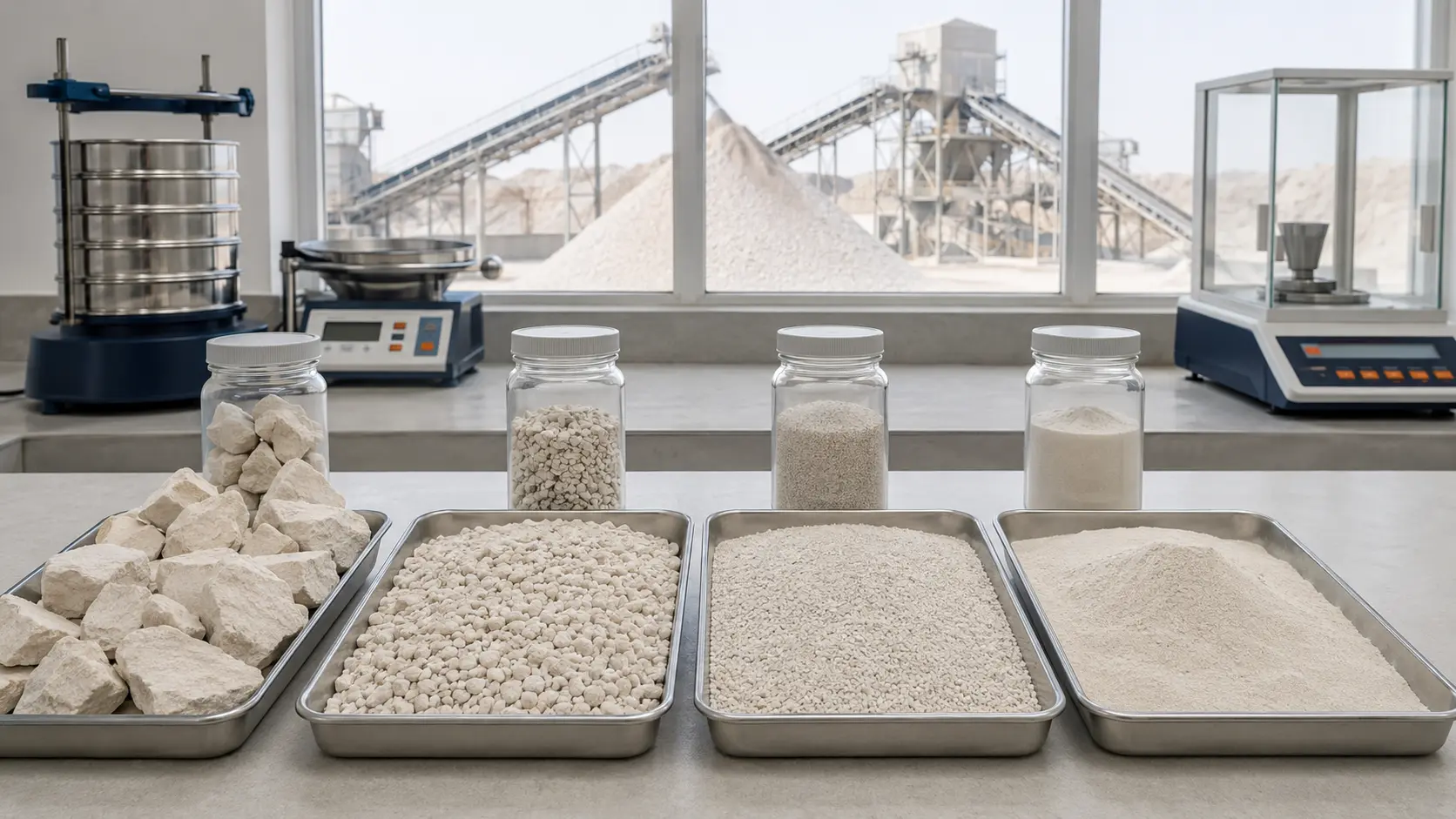
AVAILABLE FORMS
Availability and exact sizes depend on source, screening or grinding route and commercial quantity. State the complete range rather than only a nominal size.
Coarse kiln, crusher or furnace feed reviewed by top size, minimum size, fines, chemistry and physical condition.
Screened crushed material for compatible glass, metallurgy, construction and processing routes requiring controlled granular feed.
Smaller screened fractions selected for compatible blending, dosing and industrial material systems.
Ground material reviewed by mesh, micron, residue or particle-size distribution together with chemistry and moisture.
GRADE SELECTION
Send a current TDS, COA, chemical analysis, sieve specification, sample reference or approved raw material when available. Final supply parameters are stated in the proposed grade documentation and commercial offer.
Confirm cement, glass, metallurgy, lime production, construction, environmental treatment or another approved process.
Share the required CaCO₃, CaO or current approved analysis together with the applicable test method.
MgO, SiO₂, Fe₂O₃, Al₂O₃ and other limits can be critical to kiln, melting, fluxing, colour and finished-product performance.
State lumps, coarse granules, fine granules or powder—and the full sieve, mesh, micron, oversize or fines requirement.
Loss on ignition, moisture, brightness, reactivity, hardness and bulk handling are reviewed where relevant.
Confirm quantity, loose bulk or jumbo bags in 20ft FCL, destination port, Incoterm and required documents.
INDUSTRIAL APPLICATIONS
Each use requires confirmation by the buyer’s process and quality team. Biliton supplies against an agreed commercial specification rather than a generic performance claim.
Selected limestone reviewed as a calcium-bearing raw material against the plant’s CaCO₃ or CaO basis, silica modulus inputs, magnesium, moisture and feed size.
Discuss application →Compatible granular grades reviewed for approved glass batches according to CaO contribution, Fe₂O₃, MgO, silica, alumina and particle-size limits.
Discuss application →Lump and granular options considered for approved metallurgical flux programmes according to chemistry, sizing, fines, handling and furnace requirements.
Discuss application →Selected limestone lumps reviewed as kiln feed against chemistry, physical condition, size range, fines limit and the producer’s calcination requirements.
Discuss application →Crushed and granular options reviewed for compatible aggregates, blocks, paving, dry mixes and other approved building-material systems.
Discuss application →Selected forms considered for compatible neutralisation, flue-gas, water-treatment and chemical-processing systems against project-specific requirements.
Discuss application →PACKING & EXPORT SUPPLY
Industrial limestone can be shipped as loose lumps or granules loaded directly into a 20ft FCL container, or in BILITON FIBC jumbo bags loaded inside a 20ft FCL. The appropriate route depends on material form, size distribution, bulk density, dust control, receiving equipment and unloading method. Final container payload, bag capacity, lining, marking and loading pattern are confirmed in the commercial offer and must remain within applicable container and transport limits.

FROM ENQUIRY TO OFFER
Application, chemistry, form, size, quantity and destination.
Source, technical fit, preparation, documents and loading.
Grade basis, price, Incoterm, lead time and commercial terms.
Screening, packing, container loading, documents and follow-up.
FREQUENTLY ASKED QUESTIONS
Need a different technical or commercial answer? Include the question in your RFQ.
Industrial limestone can be reviewed in as-produced or screened lumps, coarse and fine granular sizes, and powder forms. Availability depends on the source, processing route, target specification and commercial quantity.
Buyers commonly review CaCO3 or CaO basis, MgO, SiO2, Fe2O3, Al2O3, loss on ignition, moisture and complete particle-size distribution. Colour, brightness, reactivity and other parameters may also matter for specific processes.
Not automatically. Cement, glass and metallurgical processes can require different calcium basis, magnesium and impurity limits, sizing, moisture and test methods. Biliton reviews each application against its approved specification.
Selected limestone lumps may be reviewed for approved kiln and lime-production programmes. The buyer should state chemistry, decrepitation or physical priorities, kiln type, required feed-size range, fines limit and current approved raw material.
For lumps and granules, state the minimum and maximum size, oversize and undersize limits and sieve method. For powder, state the mesh or micron basis, residue or particle-size distribution and any bulk-handling priorities.
The principal export routes for this product are loose bulk loading inside a 20-foot FCL container and BILITON FIBC jumbo bags loaded in a 20-foot FCL. Final route, payload and loading pattern depend on form, bulk density, container limits, destination and commercial terms.
Applicable TDS, SDS, sieve analysis and COA or shipment analysis can be supplied according to the proposed grade. Send the application, chemistry, required form and size, shipment quantity, loose or jumbo-bag route, destination port and Incoterm.
Send the process, approved chemistry, required form and size, quantity, loading route and destination. We will respond with the next practical step.